If your team has run BWise for years, it is probably woven into how you work. That is exactly why it is worth stepping back now and then. Software changes, owners change, and so does the direction a vendor takes. The question is not only whether your platform still works. It is whether its focus still matches yours.
For many risk and compliance teams in the Benelux, that question is now on the table. BWise has been a familiar name in the region for a long time. Since 2019 it has been part of SAI360, a US-headquartered suite with private equity owners and a much broader scope. So when CERRIX and SAI360 meet on a shortlist, the choice is rarely about buying a first tool. It is about staying, upgrading or moving.
This comparison looks at both platforms across the dimensions that tend to decide that choice: features, European regulatory fit, staying current, pricing and total cost of ownership. It ends with what switching actually involves.
Weighing more than these two? Our insider's comparison of the top European GRC tools in 2026 maps the wider market.
CERRIX vs SAI360 at a glance
CERRIX was founded in 2014 in the Netherlands and is headquartered in The Hague, with a second office in Belgium. It is a purpose-built European GRC platform for financial institutions, insurers, pension funds, asset managers, audit firms and regulated enterprises. Risk and control management, compliance, incidents, third-party risk, processes and GDPR share one data model. With Ruler, regulatory monitoring connects to that chain, so a change in regulation can be linked to the risks and controls it affects. More than 100 financial institutions in over 20 countries use CERRIX.
SAI360 is the GRC platform that grew out of BWise. BWise was founded in the Netherlands in 1994, owned by Nasdaq from 2012, and sold to SAI Global in 2019 for $200 million. SAI Global later rebranded the platform as SAI360 GRC. The company is now headquartered in Chicago and has been owned by US private equity firm Symphony Technology Group (STG) since 2023. Its platform is marketed as 20-plus modules on one data core, spanning risk, compliance, internal audit, SOX, ethics training and whistleblowing.
The short version: CERRIX is a focused European GRC platform. SAI360 is a broad, US-owned enterprise suite with Dutch roots. That difference runs through most of what follows.
Feature comparison
Risk management
CERRIX approaches risk management as one connected operating model. Risks define exposure, controls mitigate it, testing validates it, and incidents and reviews surface issues that flow into measures of improvement. Gross and net risk scoring, key risk indicators and control linkage are native concepts. Because everything shares one data model, you can look at the same risk from several angles: by process, by business unit, by IT system or by framework. A risk manager sees how one risk connects to its controls, tests, findings and follow-up, without exporting anything.
SAI360 covers enterprise and operational risk, risk assessments and dashboards on a shared data core. For most BWise users, though, the practical question is not what the latest release can do, but what their own installation does. Long-running implementations often carry years of custom configuration on top of the standard modules. That shapes how flexible the structure feels day to day, and how easy it is to change.
In short: CERRIX lets you view every risk from several angles in one data model. With SAI360, what you get depends heavily on how your own installation was built over the years.
Compliance and internal control
CERRIX treats compliance and internal control as a core function rather than an extension of risk:
- Build and document faster: a control catalogue of pre-defined templates that pre-map to framework requirements, such as a DORA requirement or an ISO 27001 control objective, plus AI-assisted refinement of control descriptions.
- Prove controls are sound: design and implementation testing, and sample-based effectiveness testing. Samples are drawn by the CERRIX randomiser, which gives a consistent, auditable sampling method and has been independently verified by multiple accounting firms.
- Keep controls running and evidenced: recurring or event-based tasks for control owners, reviewer sign-off and a continuous audit trail in the formats supervisors and external auditors expect.
SAI360 offers an Internal Control/SOX Compliance module with a control library mapped to COSO, SOX, ISO and NIST, covering design, testing, certification and remediation. It is clearly built around US public companies and SEC filers. For a European institution, the question is how much configuration it takes to reach the depth that DORA, NIS2 and your own supervisor expect.
In short: CERRIX covers the full control lifecycle with European frameworks pre-mapped and auditable sampling built in. SAI360's control module is clearly built for SOX and US filers.
Third-party and outsourcing risk
CERRIX covers third-party and outsourcing risk with the European supervisory context in mind, including ICT third-party risk under DORA and the EBA outsourcing guidelines. Assessments, contracts and monitoring link to the risks and obligations they relate to, so third-party risk is part of the same chain.
SAI360 offers Third-Party Risk as a separate add-on module. It runs on the same data core, but like IT risk and business continuity, it is priced on top of whichever bundle you start with.
In short: In CERRIX, third-party risk is part of the same chain and built around DORA. In SAI360, it is an add-on module with its own price.
Regulatory monitoring and AI
CERRIX treats AI as part of the GRC workflow, not a separate layer. Three parts work together:
- Regulatory intelligence. Through Ruler, used by more than 150 financial institutions, changing regulation is connected to the risks, policies and controls it affects. You see what changed, what it touches and what to do next. Ruler is licensed separately.
- AI in the workflow. For example, extracting risks and controls from your policy documents and refining control descriptions, so documentation stays clear and consistent.
- Conversational GRC. The CERRIX LLM integration connects the platform to the AI agent your team already uses, such as Claude, Microsoft Copilot or ChatGPT. Ask for every control you own and when it was last tested, update a task, or turn test results into a board-ready report, all from the chat. It runs on the CERRIX API, your existing permissions still apply, and every change lands in the audit trail.
The AI features and the LLM integration are included in every CERRIX package. You only need your own licence for the AI agent you connect. CERRIX develops AI to deliberate principles: a human in the loop, value over hype, and secure by design. See how AI supports each step of the GRC workflow on the AI & automation page.
SAI360 launched GRC Elevate 6.0 in May 2026, with AI across policy, incident and regulatory change management and support for connecting external AI tools. In December 2025 it acquired Plural Policy, a US regulatory intelligence start-up. Two things are worth checking. AI features depend on your edition, and the entry edition has none. And if you run an older BWise version, none of it reaches you until you migrate.
In short: CERRIX includes AI in every package and lets you work with your GRC data from your own AI agent. With SAI360, AI depends on your edition and on running the latest version.
European regulatory fit
Whether you report to DNB or the AFM in the Netherlands, the NBB or FSMA in Belgium, or a Nordic supervisor such as Finansinspektionen or Finanstilsynet, regulatory fit is not a nice-to-have. It is the reason the platform exists.
CERRIX is built around European regulation as a first principle. DORA, NIS2, GDPR, the EU AI Act, ICFR, ISQM, MiCA and the relevant ISO standards are core content, not regional add-ons. Because these frameworks apply across the EU and EEA, the same foundation serves a bank in Amsterdam, an insurer in Brussels and a pension fund in Stockholm. CERRIX is ISO/IEC 27001 certified, ISAE 3402 Type II verified and FSQS-NL registered, and your data stays in Europe.
BWise started in this world, which is why many Dutch banks and insurers know it. As SAI360, the centre of gravity has moved. The company is headquartered in Chicago, its SOX positioning is clearly aimed at US public companies and SEC filers, and its compliance content now spans many markets rather than concentrating on European supervision. That fits a global suite. For a buyer whose obligations are mostly European, it turns the question into depth versus breadth.
There is also a jurisdictional point that weighs in European procurement: data residency is not the same as data sovereignty. A US-headquartered provider can host data in the EU and still be subject to US law such as the CLOUD Act. That is a factor to weigh, not an absolute barrier. For institutions supervised under DORA, NIS2 and GDPR, a European-incorporated, EU-resident platform removes a question that a US-headquartered one cannot fully resolve.
In short: CERRIX is built for European supervision, from the Benelux to the Nordics, by a European company. SAI360 now serves many markets from a US base, so European depth and data sovereignty are worth checking.
Staying current, implementation and switching from BWise
This is where the comparison stops being theoretical. If you already run BWise, much of the real cost sits in what happens every time the software moves on.
The cost of customisation
Many BWise installations were configured years ago, then extended with custom work as needs grew. That is how the tool got where it is. It is also why upgrades get expensive: every new version has to be checked against what was built on top, often with the vendor's consultants and a round of manual retesting by your own team. Users describe the same pattern in public reviews. They mention a dated interface, rigid reporting, configuration that needs paid professional services, and on-premise installations that become slower and harder to maintain as more is built on them.
So before comparing CERRIX with SAI360's latest release, ask a simpler question: what would it take to get your own installation onto that release? For some teams the honest answer is a migration project in its own right.
CERRIX is SaaS on one platform version. New releases reach every customer without rework, and the second line can adjust risks, controls and reports itself, without depending on IT or a consultant.
Implementation and time to value
CERRIX implementations run on a fixed-price, fixed-scope basis, guided by CERRIX's own professional services. Because the data model already reflects how European GRC functions work, much of the configuration is about reflecting your organisation, not building the discipline from scratch. Implementations typically take three to six months, depending on scope and team size. After go-live, support comes from CERRIX's in-house team, based at headquarters alongside product and implementation.
SAI360 publishes no implementation timeline. Reviewers describe the initial setup and configuration as time-consuming, and note that customisation often requires its professional services team, which adds to both cost and lead time.
What switching actually involves
Moving off a tool you have used for years feels risky. In practice, it usually goes one of two ways:
- Lift and shift. You move your existing risks, controls and processes into CERRIX as they are, without redesigning anything. One Dutch health insurer that had run BWise for years did exactly this. Quarter-end Excel exports made way for real-time dashboards for each part of the organisation.
- Clean up on the way. You use the move to harmonise your taxonomy, remove duplicates and agree one way of describing controls. This takes more alignment up front, but your reports compare like with like from day one.
Either way, the work is mostly about your own data and decisions, not about the software.
In short: With BWise, the custom work built up over the years makes every upgrade a project. CERRIX keeps every customer on one version, goes live in three to six months, and lets you bring your existing framework across as it is.
Pricing and total cost of ownership
CERRIX uses transparent, euro-denominated pricing built around three packages: Starter, Professional and Enterprise. Each is a fixed annual fee that scales with team size, and implementation follows a fixed-price, fixed-scope approach. AI features and the LLM integration are part of every package. Finance and procurement can see what they are committing to and what renewal looks like.
SAI360 publishes no price list. Pricing is quote-only and depends on organisation size, modules, maturity and implementation needs. Several modules, including Internal Control/SOX, Third-Party Risk, IT Risk and Business Continuity, are priced as add-ons on top of the base bundle. AI is tied to the edition as well: the entry edition has no AI features, so access to AI means moving up a tier.
What users say is consistent. Reviewers on G2, PeerSpot and SelectHub describe SAI360 as a premium-priced platform that is expensive to run, particularly for mid-sized organisations, and point to professional services as a recurring extra.
For current BWise users, the licence is rarely the whole story. The costs that tend to be underestimated:
- Vendor consultancy for configuration changes and reports
- Internal time spent retesting customisations after each upgrade
- The migration project needed to reach the latest platform version
- A higher edition or extra modules to get AI features
In short: CERRIX has fixed, published packages with AI included. With SAI360, licence, add-on modules, AI tiers, services and upgrade work add up, which makes the total harder to forecast.
Frequently asked questions
Is SAI360 the same as BWise? Yes, in lineage. SAI Global acquired BWise in 2019 and rebranded the platform as SAI360 GRC. The software descends from the BWise technology many Dutch and Belgian institutions know.
Is BWise still supported? SAI360 continues to develop the platform and released GRC Elevate 6.0 in May 2026. What matters for existing users is which version they run, and what it would take to move to the current one.
Is CERRIX a good alternative to SAI360 for GRC? For European organisations whose obligations are mainly European, yes. CERRIX offers European frameworks as core content, transparent euro pricing with AI included, an in-house support team, and an implementation model built for in-house risk and compliance teams.
Can we keep our existing risk framework? Yes. You can move risks, controls and processes across as they are, and refine them later. Or you can use the move to clean up your taxonomy first.
Which platform is better for DORA and NIS2? CERRIX treats DORA, NIS2 and related European frameworks as core content and is designed around European supervisory expectations, including ICT third-party risk. SAI360 can support these requirements, but for a predominantly European organisation the question is how much configuration is needed to reach the same depth.
Conclusion
CERRIX and SAI360 share Dutch roots but have grown in different directions. SAI360 is a broad enterprise suite, now US-headquartered and owned by US private equity. It suits large organisations that want many functions, from SOX to ethics training, in one global platform.
CERRIX is a focused European GRC platform. It is built around the way European risk and compliance teams work, with regulatory monitoring in the chain, AI included and reachable from your own agent, transparent euro pricing and an in-house support team.
For teams already on BWise, the decision usually comes down to one question: is your next upgrade a step forward, or a project in itself? If it is the second, it is worth looking at what moving would take instead.

CERRIX vs SAI360 (formerly BWise): GRC software compared across European fit, pricing and staying current
Still on BWise? Compare CERRIX and SAI360 on European fit, pricing and what switching takes.
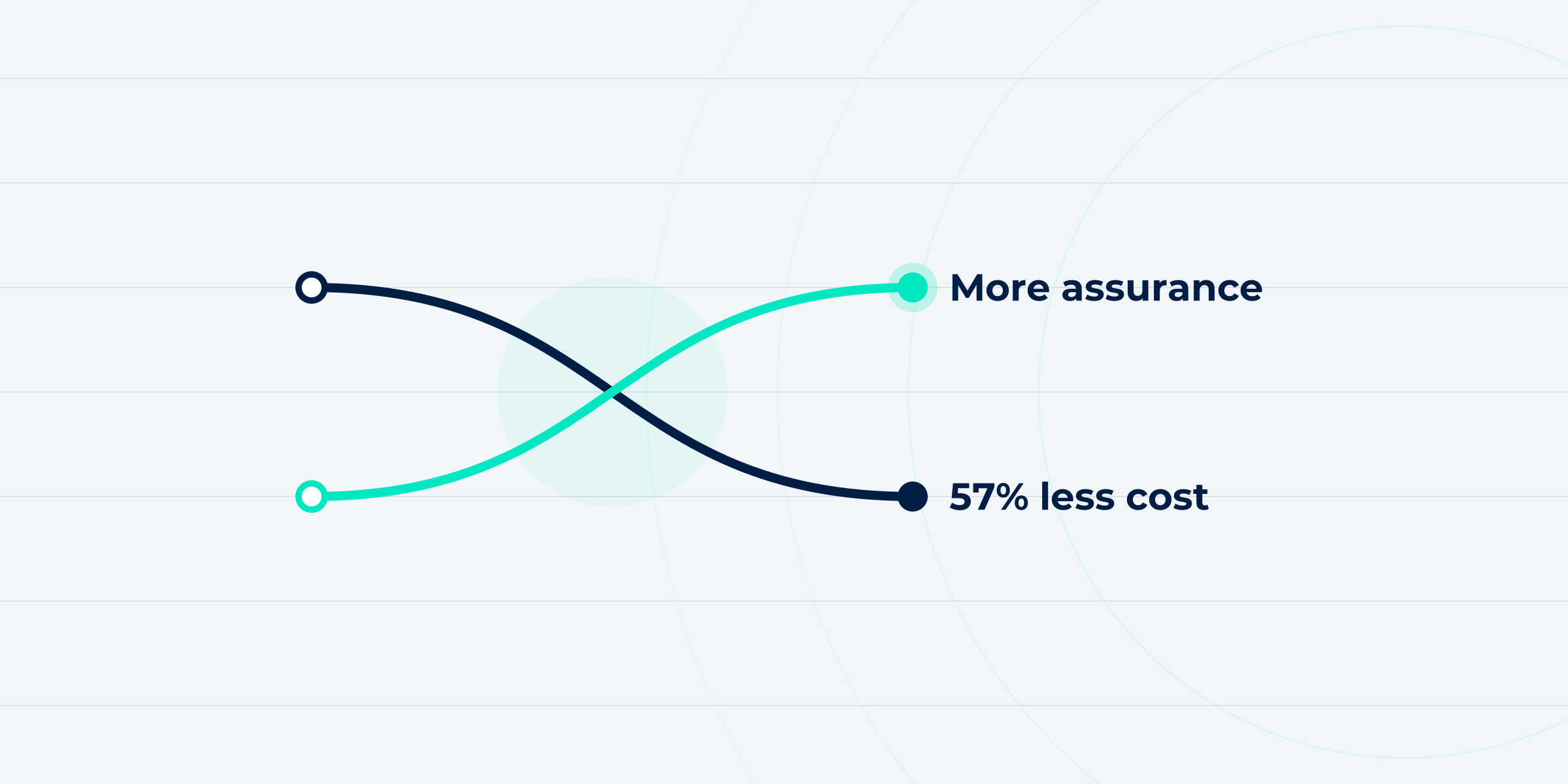
More assurance at less cost: the business case for control framework optimisation and control automation
Our COO Maurits Toet's business case: how optimising and automating your control framework can cut the cost of control by more than half, while assurance goes up.

CERRIX & Ruler User Conference 2026
On 16 September, CERRIX and Ruler users met at VvAA in Utrecht to compare notes on risk management. Here's what stood out to us.
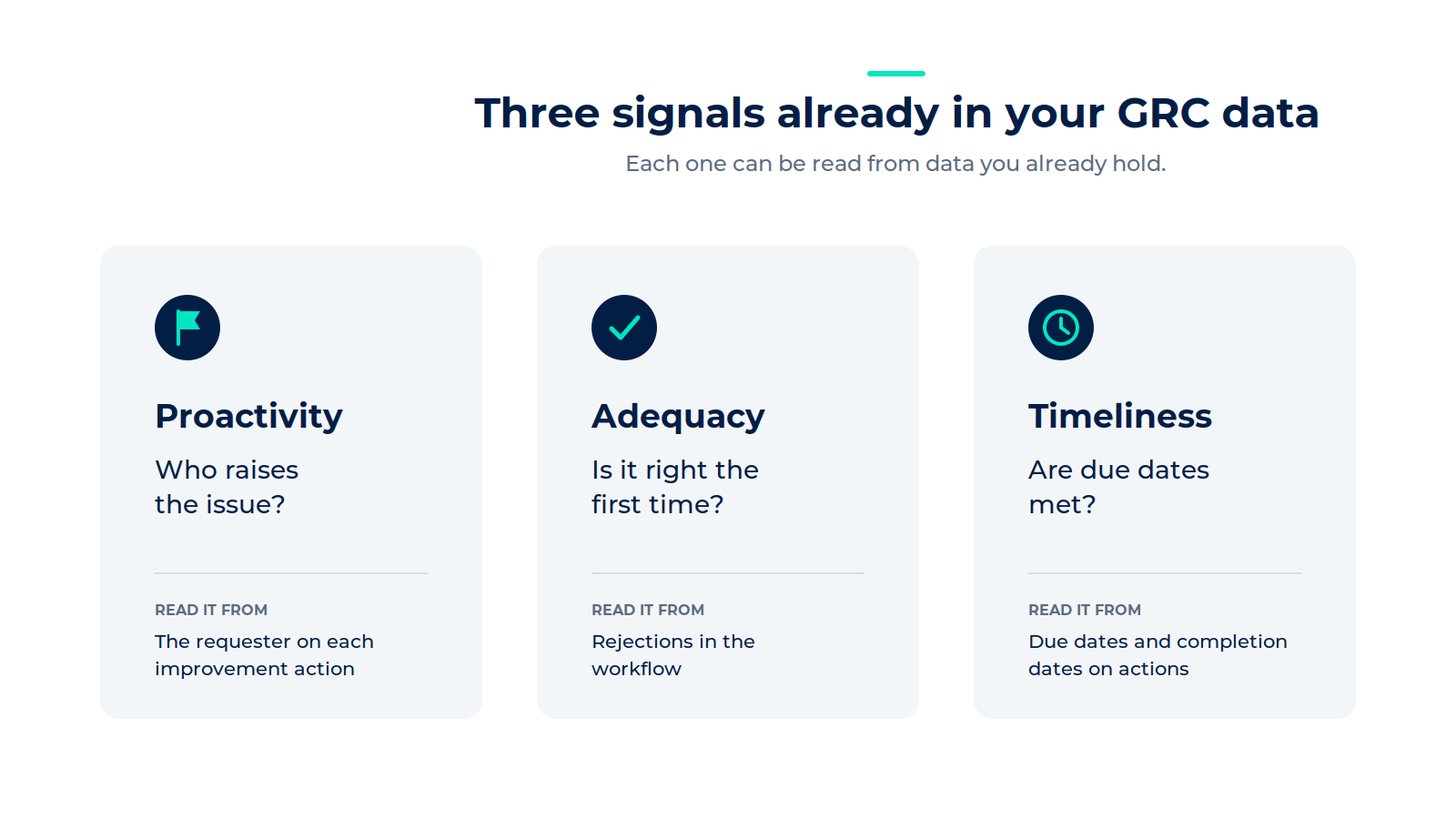
Three signals in your GRC data that show how your organisation handles risk
Takeaways from the CERRIX webinar with Jeroen Tacke and Ruben Andeweg: three signals in your GRC data that show how your organisation handles risk.

CERRIX vs Diligent: GRC software compared across features, European market fit and compliance
A side-by-side look at two GRC platforms, and which one fits the DORA, NIS2, and ISQM obligations European teams carry.

Conversational GRC: work with your risk data from the AI agent you already use
Query your controls, update tasks, and generate board-ready reports, all from Claude, Microsoft Copilot or another AI agent.

CERRIX vs ServiceNow: GRC software compared across features, pricing, and compliance
CERRIX vs ServiceNow: GRC Software compared across features, pricing, and compliance (2026)

AI in GRC: beyond the hype. What actually works at every level of adoption
Key takeaways from the CERRIX panel on AI in GRC, with practitioners from CERRIX, AuditAgent and 8weeks.co sharing what actually works.

Top European GRC tools in 2026: An insider's comparison
This blog compares the top GRC platforms available to European organizations in 2026

What Does GRC Look Like in 2030?
By 2030, AI in GRC will automate evidence collection, control monitoring, and routine reporting across all three lines of defense, shifting risk managers from administrative work to strategic advisory roles

The Complete GRC Chain: Connecting Regulatory Change Management, Risk, and Controls in One Platform
The future of Governance, Risk & Compliance (GRC) lies in connecting regulatory change management directly to risks, controls, incidents, actions, and assurance activities in one integrated platform.

Embedding automation into your risk operating model: Where AI fits and how to make It work
This second part focuses on what makes that automated model intelligent. Where AI fits. What it means for risk professionals in practice.

From checkbox to continuous: How to embed automation into your risk operating model
What it means to truly embed automation into the risk operating model: what changes, what stays the same, and what it takes to make it work in practice.

Why CERRIX acquired Ruler, and what it means for the future of GRC
CERRIX acquires Ruler to connect regulatory change with risk management.

Why Data Quality Is the Foundation of AI and Automation in GRC
A strategic look at why structured data in a GRC tool is imperative for automation, AI enabled workflows, and real time risk insights.

Internal Control Framework Challenges: Why COSO and ISO 31000 Implementations Struggle in Practice
Why do internal control framework implementations (COSO, ISO 31000) struggle? Explore common challenges in process design, ownership, tooling, and governance

Control Assurance Explained: How Organizations Move from Control Testing to Continuous Monitoring
Discover how modern control assurance moves beyond periodic testing to continuous monitoring, with clear ownership, automation, and expert opinion.

Incident Management under DORA: What Risk and Compliance Leaders Need to Rethink
Incident Management under DORA: What Risk and Compliance Leaders Need to Rethink

How to Apply ISO 31000 Risk Treatment in Practice: Insights for Risk and Compliance Leaders
A practical recap of CERRIX ISO 31000 risk treatment webinar

How We Use CERRIX GRC to Manage Our ISMS: ISO 27001 in Practice
We use our own CERRIX GRC software to manage CERRIX’s ISMS, turning compliance into confidence and showing how ISO 27001 can become part of daily business practice.

Why the Three Lines of Defense Model Is Outdated? What Every Board Should Know About the Three Lines Model
Three Lines Model Explained: Why Boards Must Move Beyond 3LOD

What Is ISO 31000 and How Does It Work?
Discover what ISO 31000 is, how it works, and why it’s essential for risk management in 2025. Learn the principles, framework, and how tools like CERRIX help organizations turn ISO 31000 into practice.

How to Write an Incident Report That Stands Up to Audits
Learn how to write incident reports that are clear, evidence-backed, and audit-ready. Includes a template, best practices, and compliance alignment for risk professionals.

How to Implement ISO 31000: Real-Time Risk Decisions with AI‑Enabled Tools
Discover how to move beyond compliance and operationalize ISO 31000 using AI, real-time dashboards, and structured risk assessments. Learn from webinar insights and best practices tailored for financial services and regulated industries.

What’s Blocking Your ISMS Rollout? 7 Fixable Challenges for Financial Institutions
Discover the 7 biggest blockers in ISMS rollout for financial institutions—and how to solve them. Learn practical strategies to secure buy-in, define scope, streamline controls, and prepare for ISO 27001 certification.

Trends Driving ISMS Adoption in 2025: What Risk & Compliance Leaders Need to Know
Discover the top trends pushing organizations toward ISMS adoption in 2025—from regulatory changes and remote work to threat evolution and AI. Learn what to prioritize to stay ahead in risk and compliance.

What Is an ISMS? A Practical Guide for Risk & Compliance Leaders in 2025
An Information Security Management System (ISMS) is more than policy—it’s your organization’s shield against evolving threats, regulation, and reputation risk. Discover what ISMS means, how to implement it, and why it matters in 2025.

The Intelligent Future of GRC: How AI is Reshaping Governance, Risk & Compliance in 2025
Explore how AI is transforming GRC in 2025—from predictive insights and automation to ethical oversight. Learn what features matter, what risks to manage.

How Do You Implement an ISMS in Financial Services Without Slowing Down Innovation?
Implementing an ISMS in financial services? Explore a practical, risk-aligned roadmap tailored for banks, fintechs, and insurers to meet ISO 27001, GDPR, and DORA compliance—without compromising agility.

How Do You Build a Robust ISMS Framework Based on ISO 27001?
Learn how to build a robust ISMS framework aligned with ISO 27001. Discover the key components—people, policies, processes, and controls—to strengthen security and achieve compliance.

When to Conduct Risk Assessments: 6 Enterprise-Critical Moments
Learn when to conduct risk assessments—annual, quarterly, after incidents or change—and how CERRIX ensures continuous compliance.

How do you build a system of quality management that works under ISQM 1?
Learn how to build a system of quality management under ISQM 1. Move beyond compliance to an operational model that proves audit quality.

What Are Risk Scoring Methods for Financial Institutions? [2025 Guide]

From Risk Assessment to Risk Management: Moving Beyond Checklists in 2025
Understand the evolution from risk assessment to strategic risk management in 2025. Learn why leading organizations are embedding risk into decision-making—and how GRC platforms like CERRIX support this shift.
What is risk management? A strategic guide for leaders in 2025

How Audit Firms Embed ISQM into Daily Practice
In our second ISQM webinar, experts from RSM, Grant Thornton, and CERRIX shared practical insights on how audit firms can embed ISQM into the heart of their operations.

What is the maximum fine for GDPR violations?
Discover the maximum fine for GDPR violations: €20 million or 4% of global turnover. Learn the two-tier penalty system, notable examples, and how to prevent costly data protection breaches.

How do you conduct a GDPR compliance assessment?
Learn how to conduct a GDPR compliance assessment with our step-by-step guide covering data mapping, documentation requirements, and 6 common gaps organizations discover. Reduce risks and ensure compliance.
What are the main requirements of GDPR?
Discover the 7 essential GDPR requirements every organization must follow. Learn about data protection principles, individual rights, breach handling, and practical compliance strategies in this comprehensive guide.

How often should you review third party risks?
Discover how often to review third party risks with our tiered approach: quarterly for high-risk vendors, semi-annually for medium, and annually for low-risk partnerships.

What should be included in a vendor due diligence process?
Discover what a comprehensive vendor due diligence process should include: financial stability assessment, security controls, compliance verification, risk evaluation criteria, and ongoing monitoring frameworks.

How do you assess vendor risk?
Learn how to implement vendor risk assessment in 5 clear steps. Discover essential strategies to protect your organization from third-party threats and ensure regulatory compliance.

What are the main types of supplier risks?
Discover the 5 critical types of supplier risks that threaten your business continuity. Learn effective strategies to identify, assess, and mitigate these vulnerabilities before they impact your operations.

What is a compliance risk assessment?
Discover how to conduct an effective compliance risk assessment to identify regulatory risks, prevent violations, and transform compliance challenges into strategic business advantages.
How do you report compliance violations?
Learn how to report compliance violations effectively through proper channels while protecting your identity. Discover documentation requirements, whistleblower protections, and what happens after you submit a report.

How do you calculate risk probability and impact?
Learn how to calculate risk probability and impact using proven methods. Transform uncertainty into measurable risks for better decision-making and strategic resource allocation.

What is third party risk management?
Learn what third party risk management is, how it protects your organization from external threats, and the steps to implement an effective TPRM program to ensure compliance and security.

What are the benefits of risk management for businesses?
Discover how risk management benefits businesses by protecting financial health, improving decision-making, ensuring compliance, and creating competitive advantages that transform threats into opportunities.

What is a risk register and how do you create one?
Wondering what a risk register is? Learn how to create this essential tool to identify, assess, and manage organizational risks effectively and boost compliance.

How often do ISO certifications need to be renewed?
Wondering about ISO certification renewal? Understand the three-year cycle, annual surveillance audits, and preparation strategies to maintain compliance seamlessly.

What documents are required for ISO 27001 implementation?
Discover the mandatory and recommended documents required for successful ISO 27001 implementation. Learn how to organize, create and maintain effective ISMS documentation that satisfies auditors and enhances security.

Do I need a consultant for ISO certification?
Wondering if you need a consultant for ISO certification? Discover key factors to make the right decision for your organization based on expertise, resources, and certification complexity.

What industries benefit most from ISO certification?
Discover which industries gain the most value from ISO certification. Financial services, technology, healthcare, and manufacturing organizations see superior ROI while enhancing compliance and competitive advantage.

Can a company lose its ISO certification?
Can a company lose its ISO certification? Discover the 8 common reasons, consequences, and prevention strategies to protect your business reputation and investment.

How long does it take to get ISO 9001 certified?
Discover how long ISO 9001 certification takes, from 4-12 months depending on your organization's size and complexity. Learn the key phases, challenges, and ways to accelerate your quality management journey.

What is ISO 27001 and why is it important for businesses?
Discover how ISO 27001 certification protects your business data, builds customer trust, and ensures regulatory compliance in today's high-risk digital landscape. A complete implementation guide.
What to know about GRC software for nis2
Explore how GRC software helps businesses comply with the NIS2 Directive, enhancing cybersecurity and risk management.
Can automation reduce compliance costs?
Explore how automation can reduce compliance costs, enhancing efficiency and ensuring regulatory adherence.
What industries benefit from compliance automation?
Discover which 6 industries benefit most from compliance automation and how it transforms regulatory burdens into strategic advantages through risk reduction and operational efficiency.
How automation streamlines compliance processes
Discover how compliance process automation reduces costs by 40-60% while minimizing errors and risks. Transform manual workflows into strategic advantages for your organization.
Is cybersecurity compliance automation secure?
Discover if cybersecurity compliance automation strengthens or risks your security posture. Learn implementation best practices that enhance protection while simplifying regulatory management.
Does automation reduce compliance risks?
Explore how automation impacts compliance risks, its benefits, limitations, and integration strategies.
Key sectors affected by NIS2 compliance
Explore the impact of NIS2 compliance on key sectors like energy and healthcare, enhancing cybersecurity and data protection.

Are automated compliance tools reliable?
Exploring the reliability of automated compliance tools and their role in cybersecurity.

DORA compliance checklist for beginners
An essential guide for beginners to understand and implement DORA compliance effectively.

Key benefits of adhering to DORA compliance
Explore the key benefits of DORA compliance, enhancing security, efficiency, and regulatory adherence.

NIS2 compliance: top strategies for success
Explore effective strategies for NIS2 compliance to enhance cybersecurity and regulatory adherence.

EU AI Act vs. GDPR: what's the difference?
Explore the key differences and overlaps between the EU AI Act and GDPR, focusing on regulation, impact, and compliance.

Can GRC tools predict compliance risks?
Exploring if GRC tools can predict compliance risks and their role in risk management.

Can a GRC tool adapt to regulatory changes?
Explore if GRC tools can adapt to regulatory changes, covering compliance management and risk assessment.
How does AI governance impact compliance?
Explore the impact of AI governance on compliance, focusing on regulation, ethics, and risk management.

How to prepare for the EU AI Act implementation?
Learn how to prepare for the EU AI Act implementation with practical steps for compliance.

Is your business ready for the EU AI Act?
Explore readiness for the EU AI Act with insights on compliance, challenges, and strategic planning for businesses.

How does DORA compliance impact financial sectors?
Discover how DORA compliance strengthens financial sectors, enhancing risk management, digital resilience, and regulatory standards.

What is DORA compliance and why does it matter?
Explore DORA compliance, its significance in financial services, and strategies for effective implementation.
DORA compliance vs other regulatory standards
Explore the differences between DORA compliance and other regulatory standards, focusing on financial regulations and cybersecurity.

Can automation improve DORA compliance efforts?
Explore how automation can enhance DORA compliance efforts by streamlining processes and ensuring ongoing monitoring.

How to integrate GRC with existing systems?
Integrating GRC with existing systems enhances compliance, risk management, and efficiency.
Can settlement discipline improve market stability?
Exploring how settlement discipline can enhance market stability, focusing on its benefits and challenges.

Why real-time analytics in GRC are vital
Real-time analytics in GRC is crucial for proactive risk management and continuous compliance monitoring.

Top 10 Features Every GRC Tool Should Have in 2025
Explore essential GRC tool features like integration, risk management, compliance, governance, and customization.

How to prepare your business for CSDR compliance?
Guide to preparing your business for CSDR compliance, covering key strategies, challenges, and technology solutions.

Embedding ISQM 1 into the DNA of Your Audit Firm: A Risk-Based Approach to Quality Management
Discover how to implement ISQM 1 with a risk-based approach. Learn how audit firms can embed quality management into daily operations and governance.

CERRIX User Conference 2025
On March 12, 2025, industry leaders, assurance experts, and CERRIX customers came together for the CERRIX User Conference 2025—a day of knowledge-sharing, insightful discussions, and collaboration on the future of risk management, compliance, and AI-driven GRC solutions.

From Spreadsheets to GRC Software: Why Pension Funds Need a Modern Approach to Risk Management

CERRIX and BR1GHT Strengthen Long-term Partnership to Enhance Governance, Risk, Compliance and Audit Solutions

Implementing DORA: From Compliance to Long-Term Resilience
